Sunny Honey: A Handwritten Font for Joyful, Authentic Design
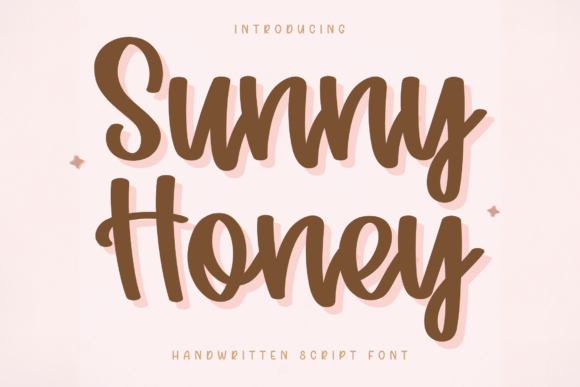
There's a particular warmth that comes from seeing genuine handwriting on a page—it feels personal, immediate, and human. In a digital landscape often dominated by sharp geometric typefaces and sterile sans serif fonts, finding a script typeface that captures that authentic handwritten quality without sacrificing usability is a real win for designers and creators. Sunny Honey is precisely that kind of font: a cheerful, carefully crafted handwritten script designed to inject personality into your work while keeping everything readable and polished.
What sets Sunny Honey apart from the sea of script fonts available today? Its soft, slightly bouncy letterforms strike a delicate balance between casual charm and professional clarity. The curves feel organic, almost as though someone sat down with a favorite pen and wrote each word with care. Yet the strokes are clean enough that the typeface holds up beautifully at different sizes, on screen and in print. This isn't a font that tries too hard to look "handmade"—it simply is warm and approachable, which makes it incredibly versatile.
Where Sunny Honey Truly Shines
One of the strongest qualities of this creative font is its adaptability across so many different project types. If you work with Cricut cutting machines, you already know how frustrating it can be when a script font's thin swashes or overlapping connections cause cutting issues. Sunny Honey was designed with smooth, clean strokes that feed consistently through cutting software, so crafters can use it for vinyl decals, greeting cards, iron-on transfers, and custom gifts without constant troubleshooting. That practical reliability matters when you're producing items for a small business or creating batches of handmade products.
Beyond crafting, Sunny Honey works beautifully in digital planning and journaling. Its natural rhythm and gentle baseline variations give planner pages, stickers, and inserts a lived-in, personal feel that rigid fonts simply cannot replicate. Bloggers and content creators will find it equally useful for social media graphics—think Instagram quotes, Pinterest pins, and story overlays where you want text to feel approachable rather than corporate. The font's readability at smaller sizes also makes it a solid choice for subheadings on websites and within editorial design layouts like magazine spreads or lookbooks.
For entrepreneurs building a brand identity, Sunny Honey offers something genuinely valuable: it communicates friendliness and authenticity without looking amateurish. A bakery, a boutique florist, a children's clothing line, a wellness coach—any brand that wants to feel warm and human can build a visual identity around this typeface. It pairs well with clean sans serif fonts for body text, creating a modern typography hierarchy that feels inviting yet organized. Think of it as the handwritten note in your brand's toolkit—the part that says, "There's a real person behind this."
How a Font Like This Shapes Perception
Typography quietly influences how people interpret your message, often more than we realize. A display font like Sunny Honey does more than decorate—it sets an emotional tone. When someone sees this typeface on a product label, a wedding invitation, or a social media post, they immediately register warmth, creativity, and a personal touch. That instant impression plays directly into brand perception and audience engagement. People connect with brands and projects that feel human, and a well-chosen handwritten font is one of the most effective ways to signal that quality.
Readability is where many script fonts fall short, but Sunny Honey handles it thoughtfully. The letter spacing and stroke weight are calibrated so that words remain legible even at moderate sizes—critical for packaging design, where customers need to read product names quickly, or for web design, where accessibility standards matter. That said, it's still a script typeface, so it's best used for headlines, logos, and accent text rather than long paragraphs. Pair it with a readable serif or sans serif for extended copy, and you'll have a typographic system that's both expressive and functional.
Practical Guidance for Working with Sunny Honey
Choosing the right font for a project always starts with context. Ask yourself what emotional register your project needs. If you're designing a logo for a cozy café or creating social media graphics for a lifestyle brand, Sunny Honey's personality is a natural fit. For a law firm or a fintech startup, you'd want something more restrained. Matching the font's voice to the project's voice is the single most important step, and it's one that experienced designers never skip.
Once you've decided Sunny Honey is the right direction, spend time testing font pairings. Try it alongside a geometric sans serif like Montserrat or a classic serif like Lora. Set a sample headline in Sunny Honey and the body text in your secondary typeface. Look at the contrast, the rhythm, the overall feeling. Good pairings create visual hierarchy—the eye knows exactly where to go first, second, and third. Bad pairings create visual noise. A few minutes of testing saves hours of revision later.
It's also worth reviewing what styles and weights the font includes. Many premium fonts come with alternates, ligatures, or stylistic sets that let you customize the look further. If Sunny Honey includes alternate characters, experiment with them in your logo design or headline work to add subtle variation that keeps text from looking too uniform. For commercial projects, always verify the licensing terms. A commercial font license ensures you can legally use the typeface in client work, products for sale, and branded materials without complications down the road.
Finally, print a test or view your design at actual size before finalizing. What looks charming on a 27-inch monitor might feel cramped on a business card or illegible on a small product tag. Typography is a discipline of details, and the difference between good design and great design often comes down to these final adjustments. Treat Sunny Honey as a valuable part of your design assets library—something you reach for when the project calls for genuine warmth—and it will serve you well across countless creative endeavors.