Autumn in Philadelphia: A Font Duo for Authentic Design
There’s a particular feeling that comes with the first crisp day of autumn in a city like Philadelphia. It’s in the air, the light, and the character of the streets. Capturing that specific, nostalgic warmth in a design project is a challenge many creators face. You want something that feels handmade, personal, and full of story, yet remains professional and versatile. This is the exact space where the Autumn in Philadelphia font duo thrives. It’s not just a collection of letters; it’s a carefully crafted tool for injecting soul into your work.
More Than a Font: Understanding the Character
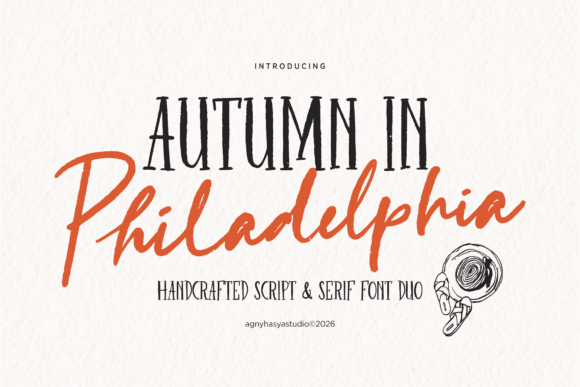
At its core, Autumn in Philadelphia is a premium font duo that pairs two distinct yet harmonious typefaces. The first is a flowing, organic handwritten script. Its strokes have a natural, slightly irregular rhythm that mimics the feel of ink on paper, complete with subtle variations in weight. It’s expressive without being messy, making it ideal for headlines, logos, and elements that need a personal, human touch.
The second component is a rustic vintage serif. These aren’t your standard, polished corporate serifs. The letterforms in this serif font have a quirky, tall stature and slightly uneven edges, evoking the feel of old shop signage or hand-carved woodblock type. This combination creates a beautiful font pairing—the elegance and flow of the script grounded by the sturdy, nostalgic character of the serif. Together, they offer a perfect contrast between sophistication and personality, making any design feel cozy, story-driven, and immediately memorable.
Where This Creative Font Truly Shines
The real test of any display font is its application. Autumn in Philadelphia excels in projects where authenticity and a handcrafted aesthetic are paramount. Think about the brands and products that tell a story of care and quality.
- Branding & Packaging: This font duo is a natural fit for logo design and brand identity for cafés, bakeries, artisanal food brands, boutique hotels, and craft breweries. The script works beautifully for a primary wordmark, while the serif can establish a strong, readable foundation for body copy or subheadings on packaging and labels.
- Wedding & Event Stationery: For invitations, save-the-dates, and menus, the font’s nostalgic warmth sets a romantic and personalized tone. It translates beautifully from digital design to letterpress or foil-stamped print.
- Editorial & Publishing: In editorial design, use the script for pull quotes or chapter titles to add a touch of intimacy. The serif is highly legible for longer text blocks in cookbooks, lifestyle magazines, or indie book covers, providing a distinct alternative to standard serif font choices.
- Digital & Social Media: Don’t relegate this to print alone. It’s a powerful creative font for social media graphics, blog headers, and website banners. The distinct personality helps content stand out in a crowded feed, making it perfect for bloggers, content creators, and small business owners looking to strengthen their visual voice.
- Handmade Merchandise: For crafters and hobbyists, Autumn in Philadelphia is a fantastic design asset. It adds a professional, cohesive look to merchandise like tote bags, t-shirts, mugs, and art prints, elevating handmade goods with a typographic style that feels intentional and crafted.
Making It Work: Practical Guidance for Designers
Choosing the right typeface is a strategic decision. Before integrating Autumn in Philadelphia into a project, consider a few practical steps to ensure it’s the perfect fit.
First, evaluate the project’s voice. Does the brief call for warmth, heritage, and craftsmanship? If the goal is sleek, ultra-modern, or corporate minimalism, this may not be the ideal choice. Its strength lies in its artisan character. Next, test it thoroughly. Download the font files and experiment with the full range of included styles and alternates. A good commercial font often includes stylistic sets, ligatures, and swashes that unlock even more creative potential. Pay close attention to readability at the intended size, especially for the script. While stunning for headlines, the handwritten script may lose clarity in very small body text, where the companion serif would be the better option.
Font pairing is an art. While the two fonts in the Autumn in Philadelphia duo are designed to work together, they can also be paired with other typefaces. The vintage serif often pairs well with a clean, neutral sans serif font for modern contrast in web design or user interfaces. Always create mockups to see how the fonts interact with your specific imagery, colors, and layout. Finally, review the licensing. Ensure the font’s commercial font license covers your intended use, whether for a client’s product packaging, a run of printed stationery, or a digital product for sale.
Building a Cohesive Visual Story
Ultimately, the goal of using a font like Autumn in Philadelphia is to build a stronger connection with your audience. Consistent use of a distinctive typeface across all touchpoints—from a website’s web design to its social media graphics and physical marketing materials—creates a recognizable and professional brand identity. It signals attention to detail and a commitment to a specific aesthetic, which builds trust and recognition.
This font duo doesn’t just decorate a page; it helps construct a narrative. It tells your audience that you value quality, appreciate history, and care about the small details that make something feel special. In a world saturated with generic, templated design, choosing a tool like Autumn in Philadelphia is a deliberate step toward creating work that feels human, timeless, and deeply authentic. It’s a small investment in your design toolkit that can yield a significant return in visual impact and audience engagement.