Vintage Remington: A Typewriter Font with Timeless Character
There's something undeniably compelling about the clatter of typewriter keys and the faint indentations they leave on paper. It’s a texture of authenticity, of words that were hammered out with intention. The Vintage Remington typeface captures this entire aesthetic in a single, powerful display font. It’s not just a collection of letters; it’s a direct line to the mid-20th century, offering a raw, mechanical beauty that modern digital fonts often lack. For designers and creators looking to inject a project with instant personality and a touch of nostalgic edge, this premium font delivers.
The Irreplaceable Aesthetic of Mechanical Text
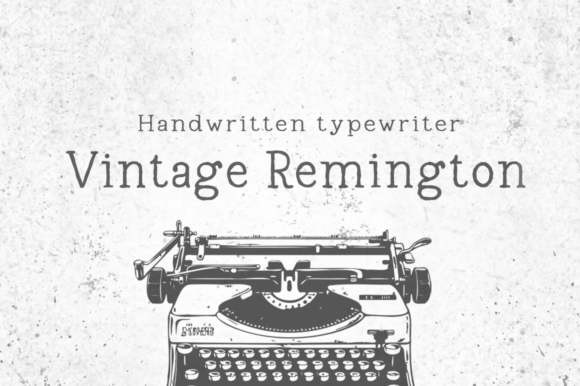
At its core, Vintage Remington is a handwritten typewriter font, but that description only begins to tell the story. Its visual character is defined by deliberate imperfections—the slightly uneven ink coverage, the subtle misalignment of characters, and the distinctive, rounded forms of its letterforms. This isn't a sterile, perfect digital replication; it’s a creative font that feels lived-in and real. The personality it projects is one of authenticity, craftsmanship, and a touch of rebellion against the slick perfection of contemporary modern typography.
This style excels in creating a specific mood. It can evoke the urgency of a breaking news bulletin, the intimacy of a personal journal, or the gritty cool of a noir detective story. Its appeal lies in its ability to communicate a narrative before a single word is read. As a display font, its strength is in headlines, titles, and short bursts of impactful text, where its unique texture can be fully appreciated without compromising overall legibility.
Where Vintage Remington Truly Shines
The practical applications for a typeface like this are surprisingly diverse, spanning both digital and physical realms. Its strength is in projects where you want to make a clear, stylistic statement.
- Branding and Logo Design: For businesses aiming for a heritage, artisan, or independent vibe—think craft breweries, boutique coffee roasters, vintage clothing stores, or a writer’s personal brand—Vintage Remington can form the cornerstone of a memorable logo design. It instantly communicates a story of tradition and hands-on quality.
- Editorial and Publishing: In editorial design, it’s perfect for magazine feature titles, chapter headings in books, or pull quotes in articles. It adds a layer of visual interest and breaks the monotony of standard body text, drawing the reader’s eye to key sections.
- Digital Presence and Marketing: On the web, it can be a game-changer for hero section headlines, blog post titles, and email newsletter headers. For social media graphics, it stops the scroll. An Instagram quote or a promotional announcement set in this handwritten font style carries more weight and authenticity than one in a generic sans-serif.
- Packaging and Print: This is where the font’s tactile quality really comes alive. Imagine it on a craft paper label for artisanal goods, on a restaurant menu, or on event posters. In packaging design, it helps a product stand out on the shelf by telling a story of heritage and character.
It’s crucial, however, to recognize its role. Vintage Remington is a specialist. Using it for long paragraphs of body copy would be a mistake, as the textured details that make it beautiful at large sizes can create visual noise and reduce readability in dense text. Its power is in the accent, not the foundation.
Making the Font Work for Your Project
Choosing a commercial font is a strategic decision. Here’s how to evaluate and implement Vintage Remington effectively.
First, consider the project’s personality. Does your brand or publication value nostalgia, authenticity, or a handmade feel? If yes, this font is a strong candidate. If your project demands sleek, futuristic, or ultra-clean minimalism, you’d be better served by a sans serif font or a clean serif font.
Next, think about font pairing. A bold, characterful display font like this needs a calm, highly readable partner for body text. It pairs beautifully with simple, neutral sans serif fonts (like Helvetica, Open Sans, or Roboto) or classic, elegant serif fonts (like Garamond or Baskerville). The contrast allows the typewriter font to command attention without creating visual chaos.
Before purchasing, review the included styles and glyphs. A robust premium font package often includes alternate characters, ligatures, and extended language support. Test the font with your specific copy. Does it have the right punctuation? Do the numbers and special characters maintain the same aesthetic? Always check the licensing for your intended use—whether for a single client project, unlimited commercial work, or web embedding—to ensure compliance.
Ultimately, the right design assets are those that serve the project’s goals. Vintage Remington isn’t just a font; it’s a tool for building a distinct brand identity. It offers a shortcut to a visual story that resonates with audiences who appreciate depth and character. When used thoughtfully, it doesn’t just display words—it gives them a voice, a history, and an unmistakable presence.