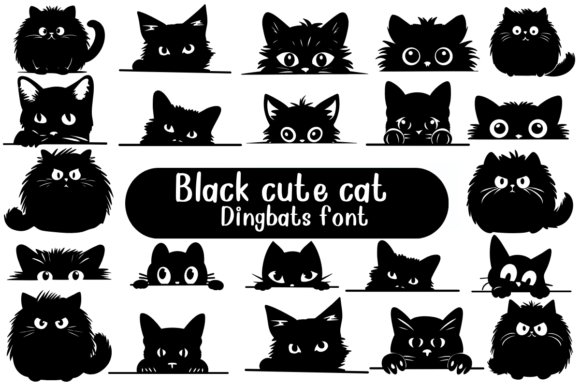
Black Cute Cat: A Dingbat Font for Playful Design
Sometimes a project needs a little personality. You've got the perfect sans serif font for your body copy, a stylish script font for accents, but something's missing. It needs a spark of charm, a wink of fun. This is where a unique creative font like Black Cute Cat steps in. It’s not a traditional typeface for sentences; it's a dingbat font, a collection of symbols where every keypress reveals a little black cat in a different pose. Imagine a cat peeking from behind a log, stretching lazily, or batting at a string. That’s the character this premium font brings to the table.
More Than a Font: Injecting Personality into Your Projects
The core appeal of Black Cute Cat is its inherent personality. Each glyph is a tiny illustration, imbued with a sense of playful curiosity. The consistent style—a simple, charming black cat—creates a cohesive visual language. This isn't about complex typography theory; it's about using these little icons as direct communication tools. They can signal whimsy, cuteness, and approachability without a single word. For a designer, this typeface acts as a set of design assets ready to be deployed. Instead of searching for separate cat illustrations that may not match, you have a unified set at your fingertips.
Consider its impact on brand identity. For a small business like a cat café, a pet groomer, or a children's bookstore, integrating these icons into the logo design, website, and packaging can build a memorable and cohesive image. A cat peeking from the corner of a business card or a series of different poses used as social media post dividers creates an immediate, recognizable motif. This display font excels in applications where visual shorthand is powerful. It works beautifully in editorial design as spot illustrations in a magazine about pets or as decorative elements in a lifestyle blog. In packaging design, a cat icon can denote a "pet-friendly" product or simply add a delightful surprise on a gift tag.
Practical Applications Across Creative Media
The versatility of a dingbat font like this is its strength. Its utility spans both digital and print realms. In web design, these symbols can serve as custom bullet points for lists, decorative elements in headers or footers, or engaging icons for a "Features" section on a homepage. They translate perfectly to social media graphics—use them as Instagram highlight covers, stickers in Stories, or small accents on quote cards to boost engagement. For bloggers and content creators, they offer a quick way to add visual interest to articles or newsletters.
In the world of print and personal projects, the applications are equally rich. Think about creating custom stationery, party invitations, or scrapbooking elements. A crafter could use these icons for iron-on transfers, embroidery patterns, or vinyl decals for mugs and notebooks. The key is to treat the font as a toolkit of clip art. You're not setting body text; you're selecting individual symbols to embellish and define. This makes it an excellent choice for projects that need a handcrafted, personal touch without requiring advanced illustration skills.
Choosing and Using a Creative Font Wisely
Before diving in, a thoughtful evaluation is crucial. First, assess the project's tone. Black Cute Cat is inherently playful and informal. It would be a mismatch for a corporate law firm's annual report but perfect for a veterinary clinic's patient intake form. Always consider your audience's expectations and the professional context.
Next, think about font pairing. This is where many get stuck. A rule of thumb: contrast is your friend. Pair the playful dingbats with clean, stable typefaces. A classic serif font like Garamond can create an interesting contrast between traditional and whimsical. A modern, geometric sans serif font like Montserrat or Lato provides a neutral, professional backdrop that lets the cat icons pop without competing. Avoid pairing it with other highly decorative or handwritten fonts, as this can quickly look cluttered and chaotic.
When you acquire the font, test it thoroughly. Open a character map to see all available poses. Does it have the specific actions you need? Check the readability—while these are icons, ensure they render crisply at the sizes you intend to use, both on screen and in print. Finally, review the licensing. For any commercial project—whether it's a client's logo, a product you sell, or marketing materials—ensure you have the proper commercial font license. This protects you legally and supports the font creator.
In the end, a font like Black Cute Cat is a specialized tool. It won't replace your primary typeface for setting text, but when used strategically, it can inject a dose of personality that standard fonts simply can't match. It’s about recognizing when a project needs that extra layer of charm and knowing how to apply it effectively. For the right project, this little black cat can become a signature element that delights your audience and strengthens your visual message.