Step Back in Time with Vintage Typist
There’s a specific feeling you get when you slide a piece of paper into a well-worn typewriter. It’s the tactile resistance of the keys, the satisfying clack of the striker, and the slightly uneven impression of ink on paper. We try to replicate that feeling in our digital designs, but often, standard fonts feel too sterile. They lack the soul of the machine. If you are looking to bridge the gap between digital precision and analog warmth, Vintage Typist offers a solution that feels less like a software tool and more like a rediscovered artifact. It captures the imperfections—the ink bleed, the misaligned strike, and the texture of a faded ribbon—to bring an immediate sense of history to your work.
The Anatomy of Authenticity
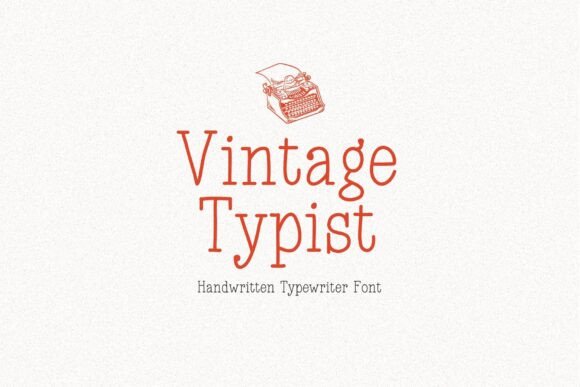
When we talk about a "premium font" in the context of display typefaces, we aren't just talking about high-resolution vectors. We are talking about character. Vintage Typist operates as a display font that prioritizes personality over rigid geometry. Unlike a clean sans serif font that demands attention through minimalism, this typeface uses texture to draw the eye. The subtle distressing on each glyph ensures that when you type a sentence, it doesn't look like a computer generated it. It looks like a human sat at a desk and typed it.
This texture is crucial for visual hierarchy. In modern typography, we often use weight (bold or light) to separate headers from body text. With Vintage Typist, the texture itself becomes a design element. It commands attention in a way that a standard serif font might not, making it an excellent choice for headlines that need to feel grounded and authoritative. However, because of this high-contrast, textured nature, it functions best as a display font rather than a body text solution. Using it for long paragraphs can cause visual fatigue, but used sparingly, it creates a focal point that anchors the entire design.
Strategic Applications: From Branding to Packaging
Understanding where to deploy a creative font like this is half the battle. The versatility of Vintage Typist lies in its ability to evoke specific eras without feeling like a costume. It fits perfectly into several key areas of design and marketing:
- Logo Design and Brand Identity: For brands that want to project authenticity, craftsmanship, or a "farm-to-table" aesthetic, this typeface is a strong contender. It works beautifully for coffee roasters, independent bookstores, artisan bakeries, or boutique agencies. It tells the customer, "We care about the details."
- Editorial Design: In magazines or book covers, particularly in the mystery, thriller, or historical fiction genres, Vintage Typist sets the mood instantly. It creates a narrative before the reader even scans the blurb.
- Packaging Design: If you are designing labels for craft beer, hot sauce, or organic goods, the font adds a layer of perceived value. It suggests a small-batch, hand-crafted process.
- Social Media Graphics: In a feed dominated by sleek, modern vector art, a textured typewriter font stops the scroll. It feels tangible and raw, which can increase engagement by feeling more "human" than the algorithm.
Practical Integration and Font Pairing
One of the most common mistakes I see in design is the "clash of the titans." This happens when a designer pairs a strong display font like Vintage Typist with another highly stylized font, such as an elaborate script font or a heavy handwritten font. The result is visual chaos where the eye doesn't know where to land.
The golden rule for font pairing is contrast, not conflict. Because Vintage Typist has a distinct texture and a monospaced structure, it pairs best with clean, simple counterparts.
- With Sans Serifs: Pairing it with a geometric sans serif font (like Montserrat or Futura) creates a beautiful balance. The clean lines of the sans serif allow the texture of the typewriter to shine without overwhelming the layout. This is ideal for web design and corporate branding with a creative twist.
- With Serifs: If you want a more traditional, editorial look, pair it with a classic serif font (like Garamond or Georgia). This combination feels academic and timeless, perfect for publishing or high-end stationery.
When evaluating the font for a project, look at the included styles. A robust typeface family will often include variations in weight or texture density. Ensure you test the font at the size you intend to use it. A font that looks gritty and authentic at 72pt might look muddy and illegible at 12pt. Always view your design at 100% zoom to check for readability.
Technical Considerations and Licensing
Before you finalize your design assets, you need to consider the technical environment. Vintage Typist is a creative font, but it has specific strengths.
Readability in Digital Spaces: On mobile devices, screen resolution is high, but viewing time is short. Use this font for headers and call-to-action buttons. Avoid using it for navigation menus or legal disclaimers where clarity is paramount.
Color and Backgrounds: Because this font mimics ink on paper, it often looks best on textured backgrounds or off-white colors (like beige or cream) rather than stark #FFFFFF white. Pairing it with muted, earthy color palettes enhances the vintage effect. If you place it on a busy photographic background, ensure you add a slight drop shadow or a semi-transparent overlay to ensure the letterforms remain distinct.
Commercial Licensing: This is a critical step often overlooked by entrepreneurs. If you are using Vintage Typist for a client project, merchandise (like t-shirts or mugs), or app design, you must ensure you have the correct commercial license. "Free for personal use" does not cover business logos or print-on-demand products. Always check the End User License Agreement (EULA) to avoid legal headaches down the road.
Elevating the Narrative
Ultimately, typography is about storytelling. When you choose a font, you are choosing a voice for your content. A modern, sleek font says "efficiency and future." A textured, imperfect typewriter font says "history, story, and humanity." Vintage Typist