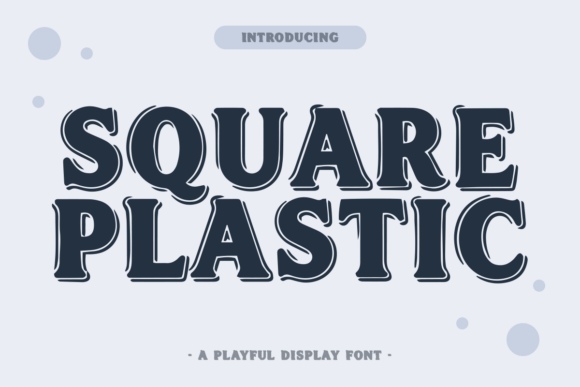
Square Plastic: A Typeface for the Modern Creative
Every designer knows the search for the right typeface can feel endless. You need something that looks good, of course, but it also has to work hard. It needs to be clear, adaptable, and have a personality that doesn't get in the way of your message. This is where a font like Square Plastic comes into the conversation. It’s not trying to be the loudest element in the room, but it brings a quiet confidence and sharp clarity that can anchor a whole project. Think of it as a reliable creative partner that helps your ideas look their best, whether they're on a screen or in print.
More Than Just Clean Lines
At first glance, Square Plastic presents a clean, geometric structure. The letterforms are built on a foundation of balanced proportions and open counters, which is a technical way of saying the spaces inside letters like ‘a’ and ‘e’ are generous. This is a key reason for its excellent readability, especially at smaller sizes on mobile screens or in dense blocks of text. But look closer, and you'll notice subtle details that give it character. The terminals—the ends of strokes on letters like ‘c’ and ‘s’—have a soft, squared-off finish. It’s this detail that gives the typeface its name and a distinct, modern feel without being overly stylized.
The personality of Square Plastic is best described as approachable and assured. It avoids the coldness of some purely geometric sans serif fonts, yet it doesn’t have the casual, hand-drawn feel of a handwritten font or script font. This balance makes it incredibly versatile. It can feel technical and precise for a fintech startup’s web design, or friendly and clean for a local bakery’s menu. It’s a modern typography workhorse that brings a sense of order and professionalism to any layout. For a brand identity, this means it can help convey stability and clarity from the very first impression.
Putting Square Plastic to Work: Real-World Applications
The true test of any creative font is how it performs in the wild. Square Plastic’s adaptability shines across a vast range of projects. Let’s break down where it truly excels.
- Branding and Logo Design: For a logo design, Square Plastic offers a strong, recognizable foundation. Its clarity ensures the brand name is legible across all sizes, from a tiny favicon to a large sign. It pairs beautifully with a wide range of secondary fonts—try it with a elegant serif font for a classic, trustworthy look, or with a dynamic display font for a more energetic, contemporary brand. The included weights and styles allow for creating clear typographic hierarchies within a brand’s visual system.
- Digital and Social Media: In the fast-scrolling world of social media, readability is non-negotiable. Square Plastic’s open letterforms make it a fantastic choice for social media graphics, Instagram stories, and video overlays. It holds its own as a headline font in a bold weight and remains perfectly legible as body text. For web design, it ensures your website copy is easy to scan, improving user experience and keeping visitors engaged.
- Print and Editorial: Don’t mistake it for a digital-only typeface. Square Plastic translates exceptionally well to print. Use it for editorial design in magazines or reports where you need a contemporary feel without sacrificing readability in long-form articles. It’s a smart choice for packaging design, where it can communicate product information clearly and look fantastic on shelf. Think of sleek cosmetic boxes, artisan food labels, or modern tech product packaging.
- Professional and Commercial Use: For entrepreneurs and small business owners, this font is a practical design asset. It elevates presentations, business cards, invoices, and email newsletters. Its professional appearance helps build credibility and ensures all your communications look polished and intentional. As a commercial font, it’s built for this kind of versatile, everyday professional use.
Choosing and Using Square Plastic in Your Projects
Adopting a new premium font is an investment, so it’s worth considering how to integrate it effectively. First, evaluate the project’s tone. Square Plastic’s modern, clean aesthetic is perfect for projects that aim to feel contemporary, trustworthy, and clear. If your project demands high historical authenticity or extreme, expressive flair, you might pair it with a more specialized display font for headlines.
A critical step is testing font pairing. Because Square Plastic is so well-balanced, it plays well with others. For a sophisticated contrast, pair it with a classic serif font like a transitional or modern serif for body text or subheadings. For a cohesive, minimalist look, use different weights and sizes of Square Plastic itself. Avoid pairing it with another geometric sans serif font that is too similar, as this can create visual tension rather than harmony.
Always review the full character set and styles included with the font. Check for essential features like ligatures, alternate characters, and extended language support if your project requires them. Before finalizing, conduct a thorough readability test. Set paragraphs of text at the intended size for your final medium—whether it’s a mobile screen, a printed brochure, or a large poster—and review them for comfort. The goal is for the typography to support the message, not become an obstacle to it.
Finally, ensure you understand the licensing. A commercial font license like the one for Square Plastic typically covers a wide range of uses, but it’s always best practice to verify that it aligns with your specific project scope, especially for large-scale commercial applications.
In the end, Square Plastic is the kind of typeface that becomes a quiet hero in your toolkit. It doesn’t demand all the attention, but it consistently delivers the clarity, professionalism, and adaptability that great design requires. It’s built for the reality of modern creative work, where a single font might need to carry a brand across a dozen different touchpoints. By focusing on solid fundamentals and versatile application, it proves that sometimes the most powerful design choice is one that simply, and effectively, gets the job done.