Gelish: A Ligature Serif for Timeless Branding
In the crowded landscape of digital typography, finding a serif font that balances classic elegance with contemporary crispness can be a challenge. Many typefaces lean too heavily into the past, feeling dated, while others chase trends that age quickly. Enter Gelish, a refined ligature serif font that offers a distinct middle ground. It isn’t just a collection of letters; it is a carefully engineered tool designed to elevate visual communication through precision and flow.
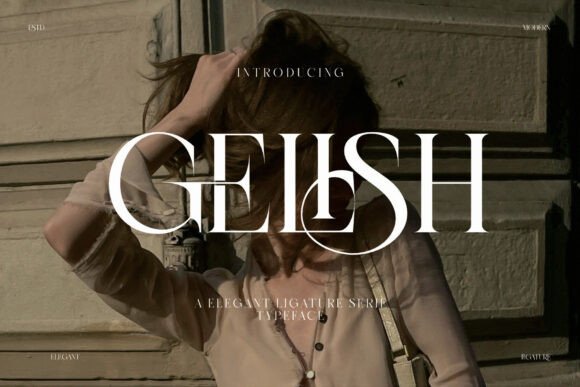
What sets Gelish apart is its handling of connections. Ligatures are specialized character pairings—such as "fi," "fl," or "tt"—that are designed to prevent awkward collisions and improve the rhythm of text. In Gelish, these aren't just functional fixes; they are stylistic features that create a smooth, harmonious visual experience. This attention to detail makes it an ideal premium font for professionals who understand that typography is the voice of a brand. Whether you are a graphic designer crafting a logo design, a small business owner building a brand identity, or a publisher laying out a magazine, Gelish provides the sophistication needed to stand out.
The Visual Personality of Gelish
Understanding the anatomy of a typeface helps in determining if it fits your project. Gelish is characterized by its precision. The strokes are clean, and the serifs are deliberate, offering the stability of traditional fonts without the heavy, stuffy feel of old-world printing. It possesses a subtle modern touch, likely visible in its geometric balance and open apertures, which aids in legibility across both web design and print design.
The personality of Gelish is best described as "quiet confidence." It does not scream for attention like a loud display font, but it commands respect. This makes it versatile. It feels luxurious, which is a psychological trigger for consumers. When they see this font on packaging design or high-end social media graphics, they subconsciously associate the product with quality and care. It is a creative font that bridges the gap between a script font—which can be too casual or hard to read—and a standard sans serif font, which can sometimes feel too sterile or corporate.
Where Gelish Shines: Practical Applications
The versatility of a font is measured by its utility. Gelish excels in specific areas where clarity and luxury intersect. Here are practical scenarios where this typeface delivers real value:
- Editorial Design: For bloggers and publishers, creating a visual hierarchy is essential. Gelish works beautifully for headlines and pull quotes in editorial design. Its ligatures add a decorative flair that draws the eye, making it perfect for magazine covers or feature article titles.
- Premium Branding: If your brand identity requires a sense of heritage or luxury, Gelish is a strong contender. It is particularly effective for boutique hotels, high-end consultants, wedding planners, and artisanal goods. It signals that your business values tradition and quality.
- Invitations and Stationery: The "smooth flow" of Gelish makes it a natural fit for wedding invitations, event programs, and thank-you cards. It mimics the continuity of handwriting but retains the legibility of a structured serif.
- Digital Layouts: In the realm of web design, Gelish can be used for hero sections or large headers to establish a sophisticated tone immediately upon page load.
Typography Strategy: Pairing and Hierarchy
No font exists in a vacuum. One of the most critical skills in modern typography is font pairing. Because Gelish has a distinct personality, it requires a complementary partner to maintain balance. A general rule of thumb is to pair a serif with a sans serif.
Since Gelish is a refined serif, it pairs exceptionally well with a clean, geometric sans serif font. The contrast allows the serif to do the "heavy lifting" for elegance, while the sans serif handles the bulk of the body text for maximum readability. Avoid pairing Gelish with a handwritten font or another ornate script font, as this can create visual clutter. The goal is contrast, not competition.
Consider visual hierarchy when implementing Gelish. Use it for H1 and H2 headings to establish authority. For body text, switch to a neutral sans serif. This combination ensures that your content is easy to scan while maintaining a cohesive brand identity. If you are using Gelish for logo design, ensure the tracking (letter spacing) is adjusted. Serif fonts with ligatures often look best with slightly looser spacing to allow those unique character connections to breathe.
Evaluating Fit and Readability
Before committing to a commercial font, it is vital to test it in real-world scenarios. Gelish is marketed as a premium font, meaning it likely comes with a commercial license. This is a crucial consideration for entrepreneurs and marketers. Using a free font for a commercial project can sometimes lead to licensing issues; investing in a licensed typeface like Gelish ensures legal safety and access to high-quality technical support and updates.
When evaluating Gelish for your project, focus on readability at scale. A common mistake is using a decorative serif for long paragraphs of small text. While Gelish is crafted with precision, very small sizes on low-resolution screens might blur the delicate ligatures. Always test the font on mobile devices. If you are designing a website, use Gelish for desktop headers but consider a standard sans serif for mobile body text to ensure accessibility.
Furthermore, check the font file for included styles. A versatile typeface family usually includes bold, italic, and light weights. You need these variations to create emphasis. For example, you might use Gelish Bold for main titles and Gelish Light for subtitles. This variation creates depth in your design without introducing another font, keeping your visual identity clean and professional.
Design Assets for the Modern Creator
For the modern creator—whether a crafter designing SVGs or a marketer creating social media graphics—efficiency is key. Gelish serves as a foundational design asset. Because it carries so much stylistic weight on its own, you can often simplify other design elements. You don't need complex borders or heavy gradients when the typography is strong.
Think of Gelish as the "little black dress" of your font library. It is appropriate for almost any occasion where you want to look polished. It elevates the mundane. A simple PDF report becomes a professional document; a basic business card becomes a statement of intent. By incorporating Gelish into your toolkit, you are not just choosing a font; you are adopting a standard of quality that your audience will recognize and appreciate.